
About MICHR
The Michigan Institute for Clinical & Health Research (MICHR) is leading the way in building the field of translational science with the intent of extending life and reducing the impact of illness and disability.
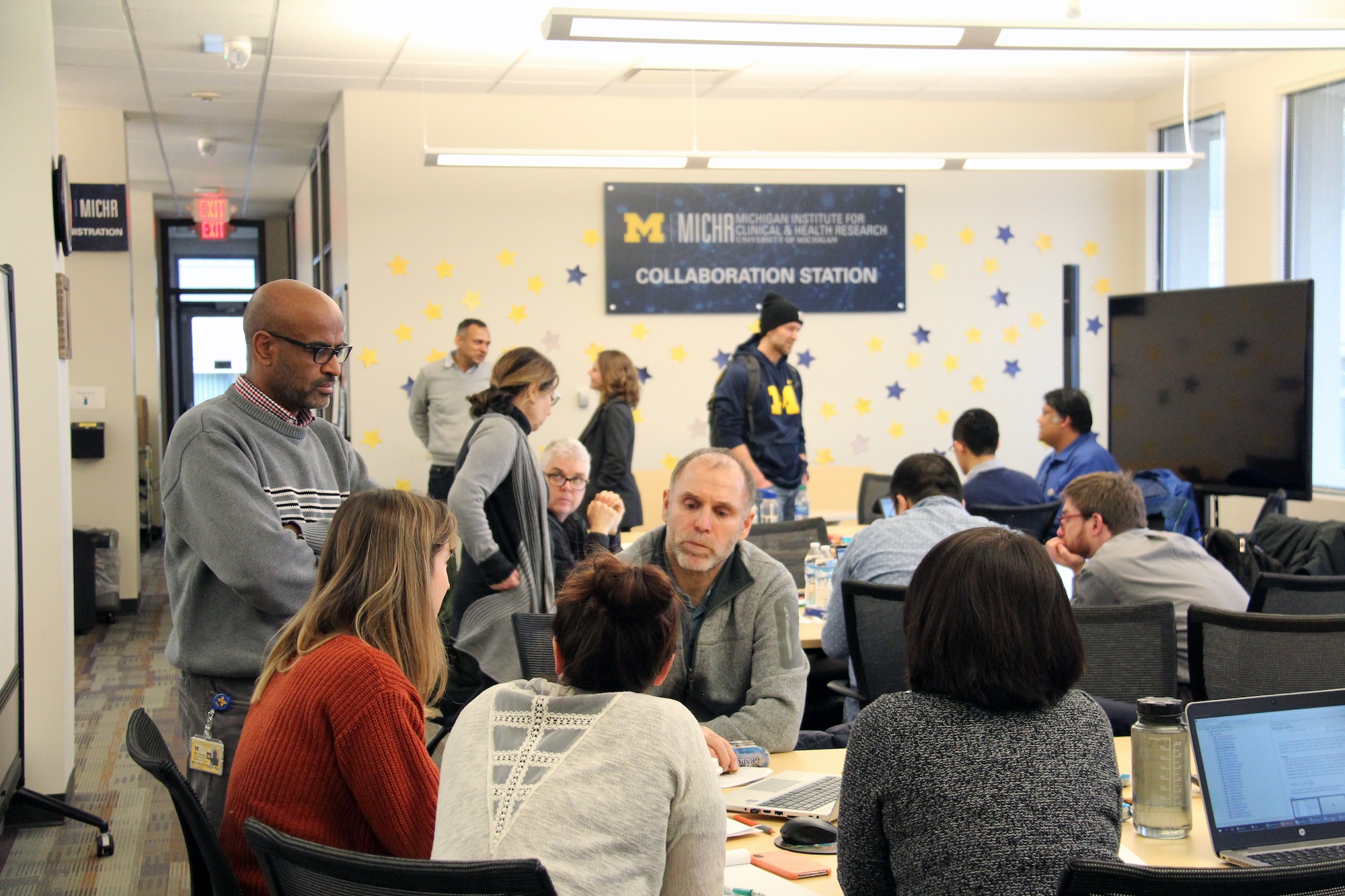
MICHR is developing and demonstrating scientific and operational innovations in the translational process and disseminating these solutions nationally.
History
Founded in 2006, MICHR received a Clinical and Translational Science Award in 2007 from the National Institutes of Health (NIH). Renewed in 2012, 2017, and 2023, MICHR is part of a national consortium of more than 60 academic research institutions funded by the CTSA program, accelerating discoveries toward better health.
Executive Leadership



Program Leads
LaTonya Berryhill, MBA
Brenda Eakin, MS, ACSM-CEP
Vicki Ellingrod, PharmD
Polly Gipson Allen, PhD
David Hanauer, MD, MS
Mike Holinstat, PhD
Rula Karapatsakis, MS
Amy Kilbourne, PhD, MPH
Beth LaPensee, PhD
Jim Maszatics, BA
Susan Murphy, PhD, ScD, OTR
Tricia Piechowski, MPH, MSW, MA
Eli Samuels, PhD
Emily Somers, PhD, ScM
Cathie Spino, ScD
Dave Williams, PhD
Jeanne Wright, RAC