Who is MICHR?

MICHR is here to enable & enhance clinical & translational research at U-M and across the CTSA consortium. We do this by being a catalytic partner who educates, funds, connects, and supports research teams here and beyond. Think of our helpful and knowledgeable staff as your extended research team.

Call 734.998.7474 or email
um-michr@umich.edu to get started.

Building a pipeline of research talent.

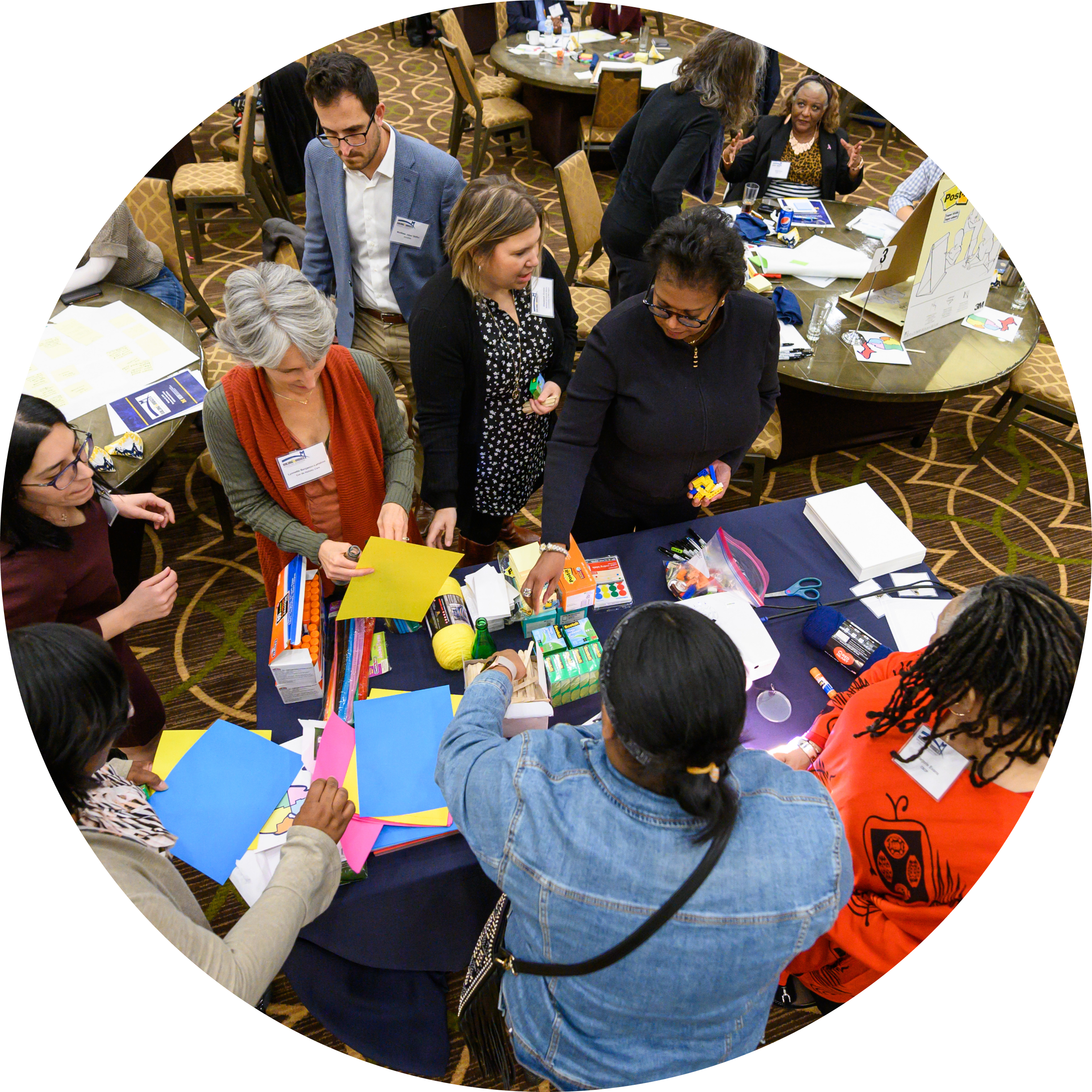
MICHR offers workshops and courses for all research team members, and we connect students, faculty, and staff through mentoring relationships.

Helping you launch your ideas.

MICHR's Pilot Grant Program facilitates innovation and collaboration across the research spectrum by helping you launch your ideas. MICHR has awarded more than $14M in pilot grants, which has led to more than $94M in extramural funding.

Our Research Development Core provides free consultation in development of federal/foundation/industry-funded grant proposals.

Engaging communities. Recruiting participants.
Navigating the research enterprise.

MICHR's Community Engagement Program connects researchers with various internal & external groups. More than 12,000 registered volunteers are ready to connect with your studies. We also connect specific-need areas with MICHR's services. And, our Research Navigator connects you with U-M's entire research enterprise.

Providing expert support for research studies.

In addition to our major programs, MICHR offers a variety of research management and support services — from biostatistical analysis to study management & monitoring to regulatory assistance to data management and more. Think of us as your extended research team.

  • SUMedicine Survey asking patients to assess their walking ability could help predict a person's risk of cardiovascular disease: http://t.co/nS7DOSC6MB
  • SUMedicine That concludes our coverage of today's Big Data in Biomedicine. The event/webcast resume tomorrow at 9AM: http://t.co/BnjqdG8CFl #bigdatamed
  • SUMedicine MT @bioitworld; Stanford's Mike Snyder: 6 viral infections over 38 months, I blame the kids. But makes for interesting science. #BigDataMed
  • SUMedicine DH: Must build global platforms for storage, exchange & analysis of molecular & phenotype info to advance research & health care #bigdatamed
  • SUMedicine David Haussler at #bigdatamed: No. 1 interpretive challenge is to model effects of genetic changes on molecular pathways & phenotypes.
  • SUMedicine DH: #1 infrastructure issue is to achieve statistical power by aggregating info. Must head off development of genomic info silos #bigdatamed
  • SUMedicine .@ucsc researcher David Haussler discussing big data/new models needed to study DNA variation in cancer http://t.co/qrMp8VgWlG #bigdatamed
  • SUMedicine Mark Davis continues: This depends on using the latest technology to analyze blood and blood cells. #bigdatamed
  • SUMedicine Mark Davis: Entering a new era & beginning to unlock clues of immune system’s role in disease & develop ways to measure immunological health
  • SUMedicine Euan Ashley emphasizes dramatic drop in DNA sequencing costs saying: If price of Ferrari Spider kept pace it would cost 40 cents #bigdatamed
  • SUMedicine #Stanford researcher Euan Ashley at #bigdatamed: Need to think globally to understand the biology, but for patient care need to act locally.
  • SUMedicine .@2004rs: You can find the livestream for the Big Data in Biomedicine conference here: http://t.co/IoNWd9awdC
    

Take a sneak peek of the newly redesigned UMClinicalStudies.org, which provides research study teams at U-M with an easy-to-use resource to connect with more than 12,000 potential participants.

Have you visited U-M's new C.S. Mott Children's Hospital?